Cartagena, Colombia
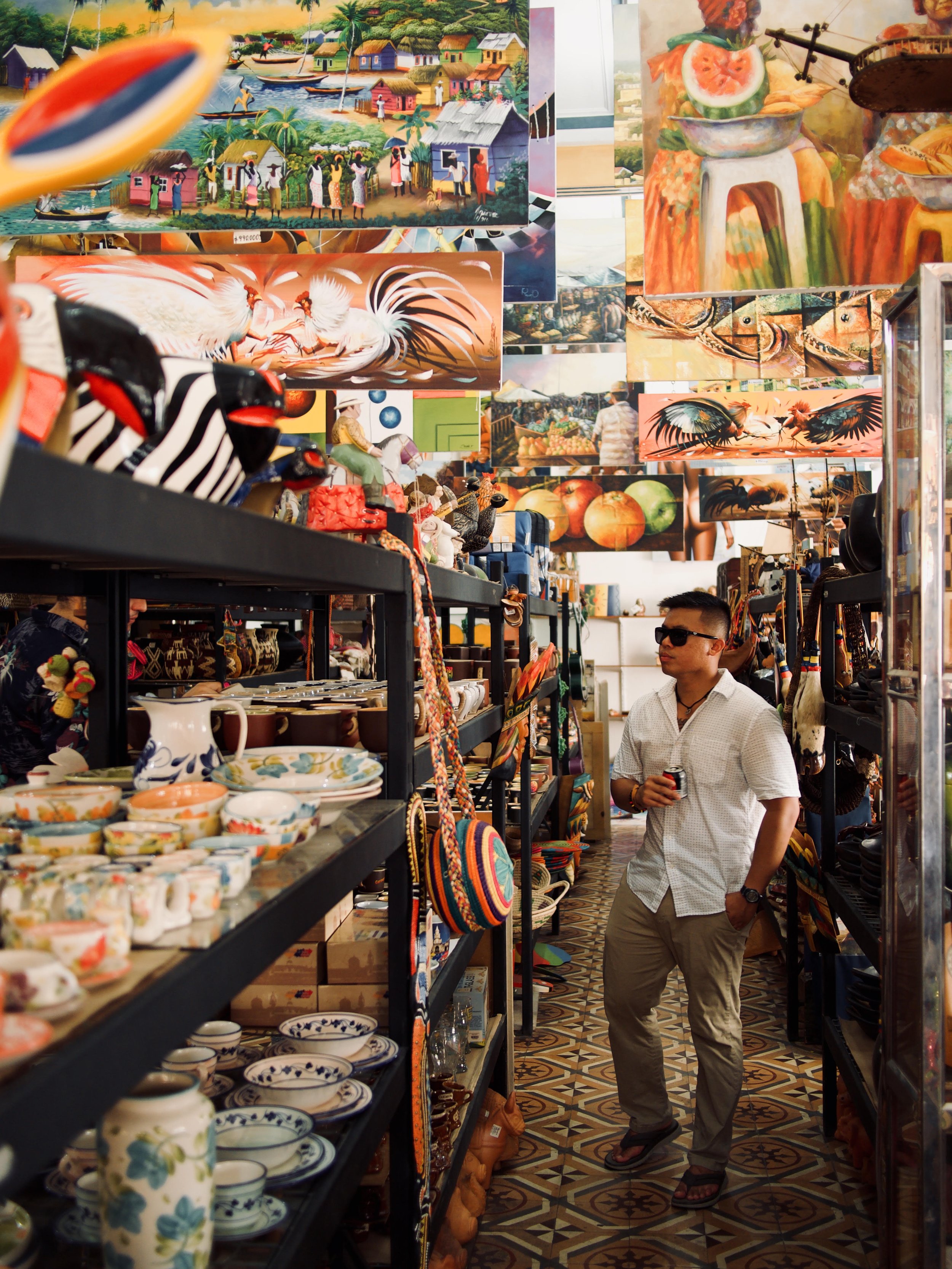
Quil wandering a store in Cartagena, Colombia
walled city
From what I can remember, I stumbled into the church half-drunk on liquor and heat, held upright by an elderly gentleman murmuring to me in Spanish.
He raised one arm toward the newlyweds, who were walking in front of a photographer, family eagerly waiting behind them. I clapped with the guests. Nobody looked twice at the stranger swaying in the back pew who was clearly underdressed but joyful all the same. I found myself hugging two relatives I had never met, clapping wildly.
“Gracias!” I called to the couple, waving as I left Iglesia de Santo Toribio.
It was almost 9 p.m. I had been out for over ten hours. My coworkers had warned me not to wander alone at night, which I had done for a few nights now.
I had never walked the Walls after dark, so I turned toward the northern side of the Walled City, up a street lit by every third lamp.
Cartagena de Indias, simply Cartagena to most, is a coastal city in northern Colombia that became one of Spain’s principal treasure ports after its founding in 1533. Gold, silver, gems, manufactured goods, and other colonial products passed through it on their way across the ocean. Its location made it a thriving city, and a target. In 1586, Sir Francis Drake, whom the Spanish called a pirate, sacked it with little resistance. In response, the Spanish Crown ordered a modern system of fortifications so such a catastrophe would never happen again. Construction on the walls, which stretch roughly eleven kilometers, began the same year as the sacking and finished in 1796, 210 years later.
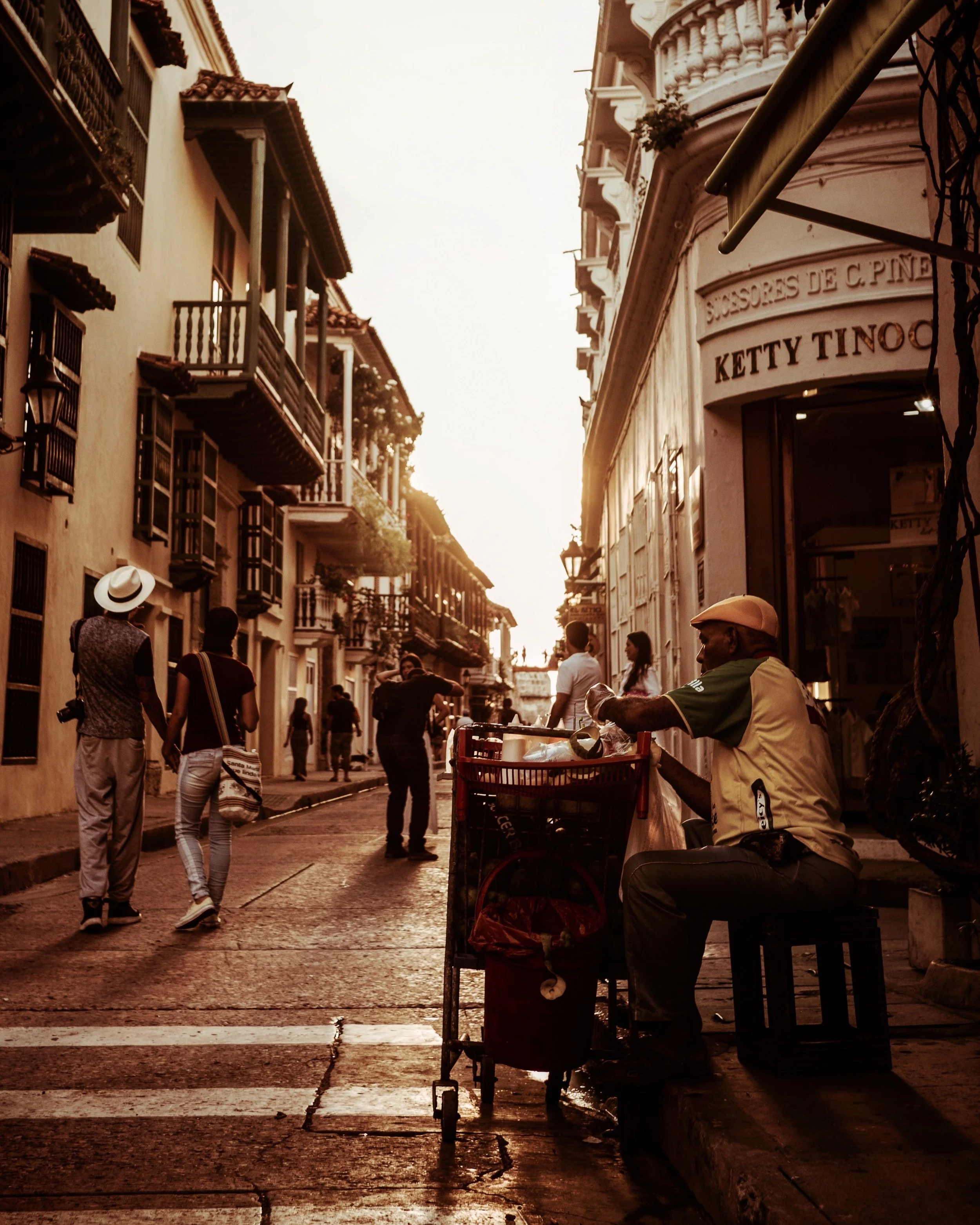
A snapshot inside the Walled City
Nearly 500 years after its founding, Cartagena remains a jewel of the region, having lost little of the vibrant life its inhabitants must have enjoyed centuries ago. Trade is still rampant, with shops and restaurants lining the streets of the Walled City, inviting tourists and locals alike.
I was almost there when laughter and singing drifted down from somewhere ahead, the sound only good drinks and good company make.
"Calle Stuart," the sign read.
I looked down the street, then up at the balconies hanging over the corner. I was alone, and it was getting late. I gave it another second, another thought, when the smell of roasted meat and fresh bread made the decision for me.
I could use some food before I head back.
I turned right.
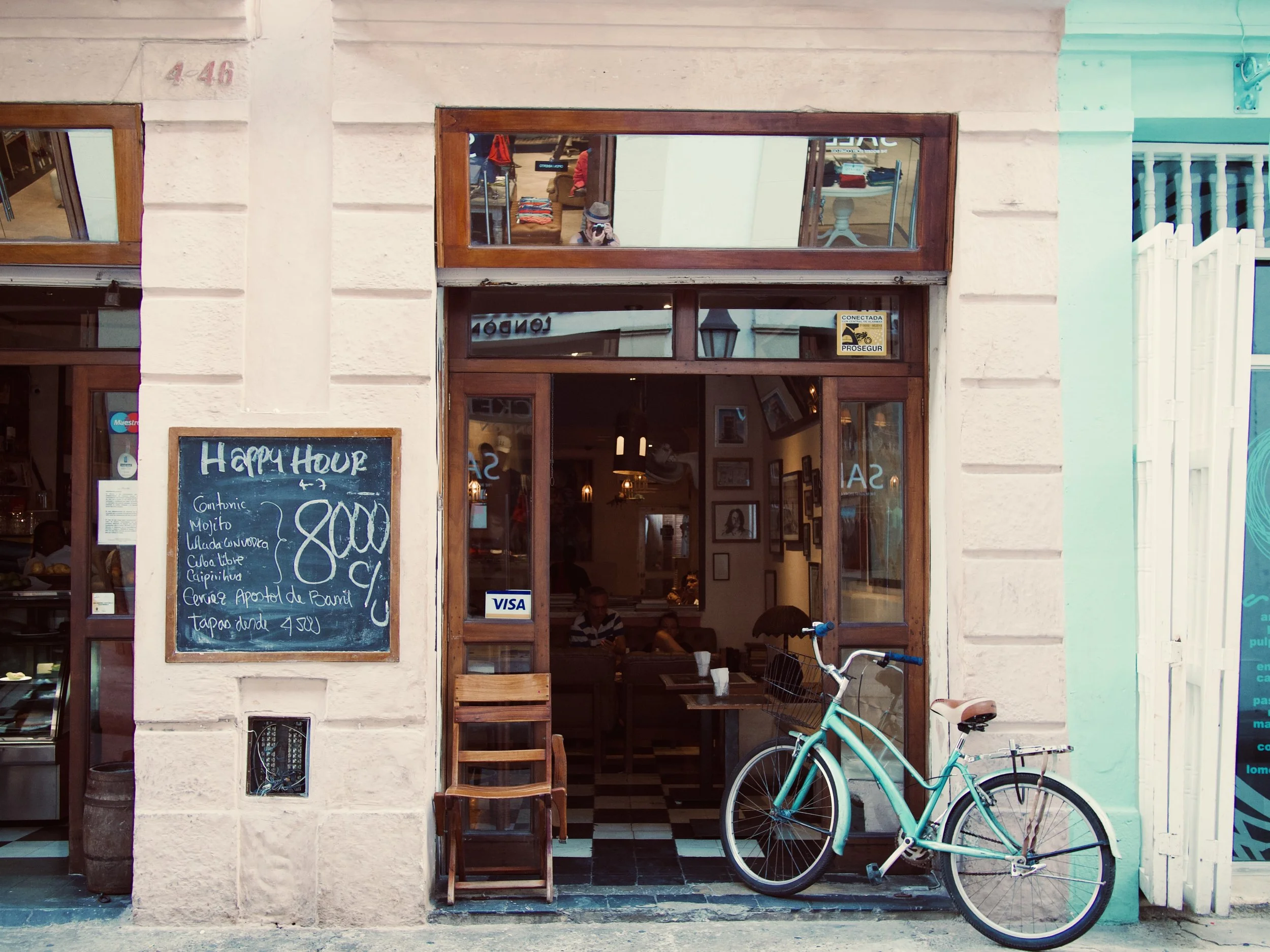
One of many bars to eat and drink in the city.
Chairs lined the sidewalks of Plaza de San Diego, some spilling into the street, others half occupied by bags and souvenirs. Artwork covered parts of the ground, canvases propped upright while their artists haggled with tourists. A large red building with a circular stained glass window reflected the life pouring out of the park. In front of its gates stood a busker singing his heart out, joined by a group singing theirs, fueled by the right amount of alcohol and encouraged by the right kind of people. Onlookers smiled, and a few decided to spend their night there, settling at the restaurant beside the park. I checked my watch and joined the crowd around one of the vendors, hoping for a quick bite. Unable to tell where the line began or ended, I stood facing the busker and inched closer to the vendor.
I was trying to make out the song the crowd was singing when I reached into my pocket for some change for the singer.
“He sings very well, right?” the man next to me said. “That’s my guitar.”
“What do you mean?”
“His friends,” he said, pointing at the crowd. “They asked if he could borrow it. They are drunk and loud but happy, so I said yes.”
“That’s nice of you. How long will he sing?”
He shrugged. “I’m on break. People are giving him money, but it’s mine.”
“Easy money!” I said, putting the change back in my pocket. He winked as bills and coins landed in the hat on the ground.
We clapped with the crowd as the singer finished what sounded like his last song.
Somewhere in that conversation, the gap in front of me filled and I lost my place in line. When I turned to say goodbye, the man was already on his way to take back his guitar. I never got his name. I’m not sure he got mine.
My legs were heavy. I told myself it was time for the Wall and my hotel room.
I was stepping around canvases when a group ahead of me started chanting a word.
“Havana! It’s not far. Quick walk! I just want to see it!”
I stopped and did what any tourist would do: I googled it.
A quick search sent me to Instagram, which gave me glasses of colorful cocktails, people dancing shoulder to shoulder, and performers crammed into a room far too small for the crowd. 15 minutes away. The clock in the corner of my screen read almost 10 p.m. I kept swiping.
Behind me, cheering broke out again, and three friends raised their bottles in a toast.
I pocketed the phone and followed the blue line towards a place called Café Havana.
If that wasn't a sign...
The walk to Café Havana was an experience in itself, filled with the kind of life you find only when exploring a foreign country for the first time. Colombia was my first time in South America, and Cartagena lived up to its reputation as the gateway to the continent.
Earlier that morning, I had paid a taxi driver $25 to take me to some key tourist sites, thinking it would give me a better appreciation of the place. It wasn’t until our first stop, when we pulled over for snacks and drinks, that I realized the danger I’d put myself in. Whether it was trust in the locals or plain ignorance, I don’t remember, but I felt safe enough.
“Cartagena is safe, señor,” the driver said, watching me in the mirror.
“How safe?”
“Safer than Bogotá, I promise you.”
“I’ve never been to Bogotá.”
“That’s good! Bogotá is in the mountains. Too cold. Cartagena is warm, plenty of sun and beautiful women! But be careful at night with those beautiful women.”
“I thought you said it was safe?”
“It is! It’s the women who are dangerous! So beautiful, you forget how to think!”
He told story after story of the times he had failed to take his own advice, and by the end I was laughing too hard to be scared. I remember his laugh better than his name.
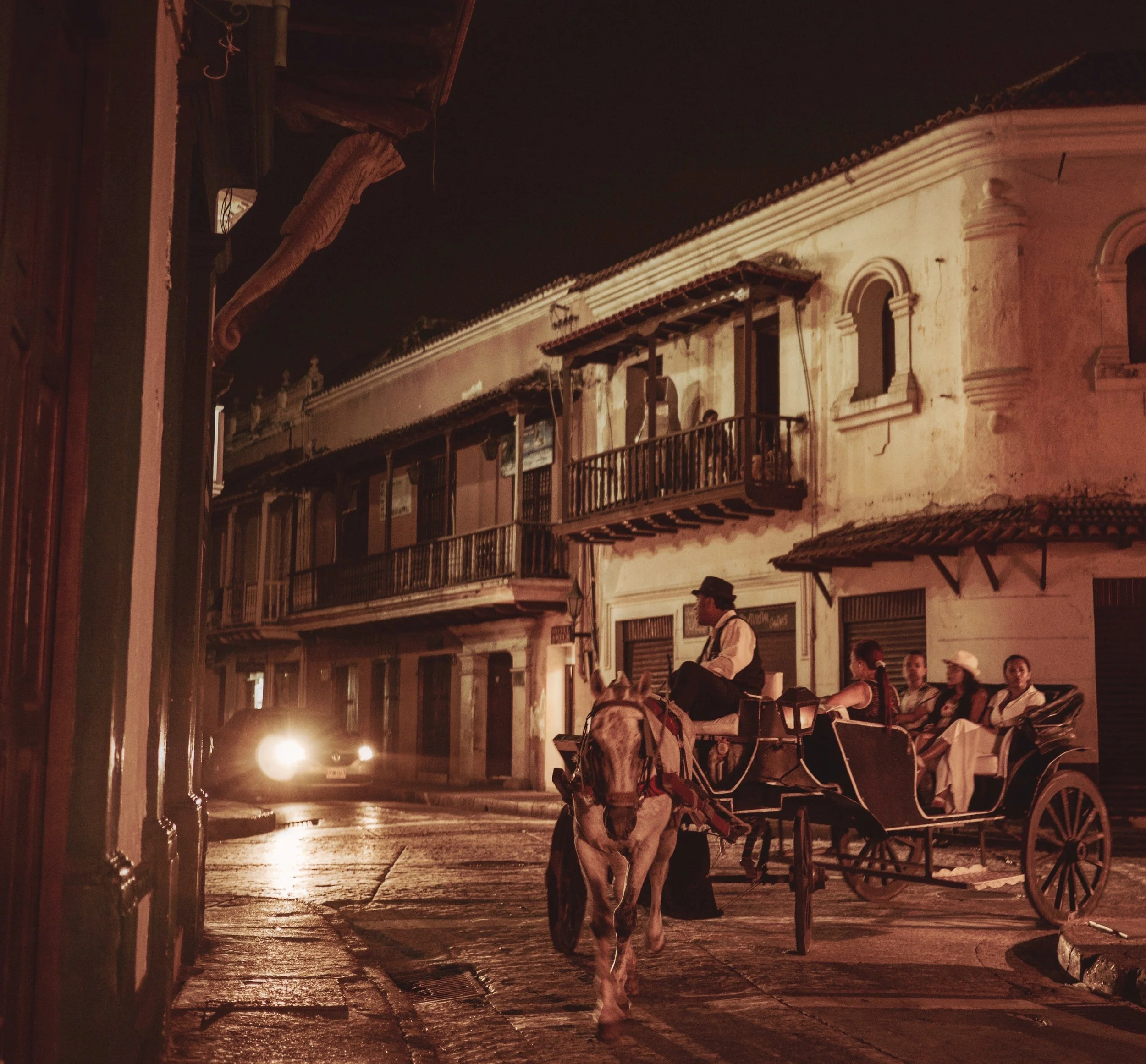
Old and new share the road.
The walk took longer than I’d planned, with my Maps barely keeping up with my wandering curiosity. I kept stopping for anything that caught my eye: balcony conversations, murals, the different people wandering the streets at that hour. Looking back, I couldn’t retrace the route if I tried but it involved horse carriages and the soft gold of old streetlamps.
I arrived at Café Havana to find the entrance less crowded than I’d expected, though still enough to warrant a wait. The people outside were friendly, most of them offering me a cigarette while we waited.
“Are you by yourself?” a couple asked.
“For now, my friends got here before me." I lied, taking a drag and pointed in their direction. "Where’s that accent from?”
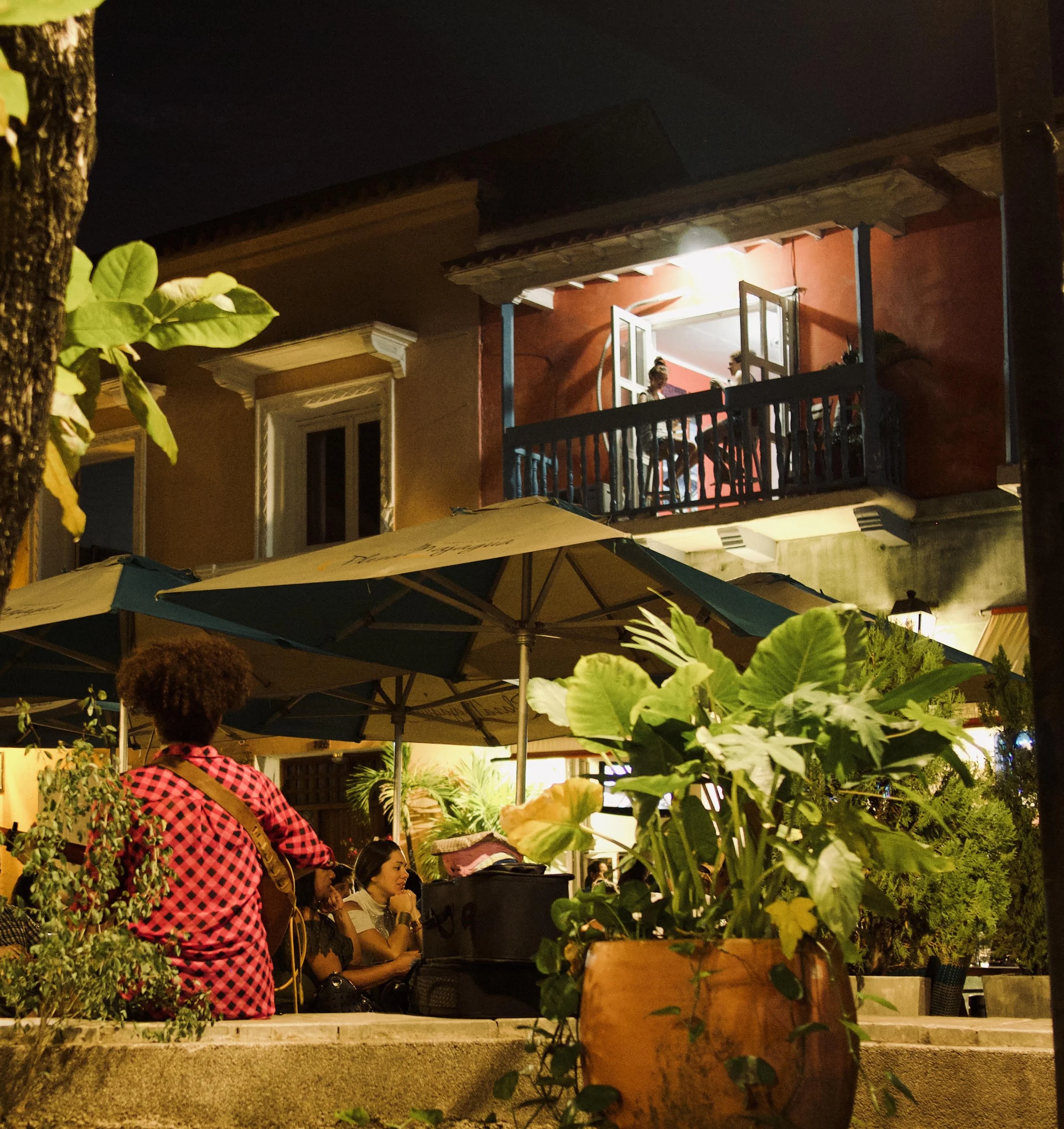
Midnight serenade, taken during one of Quil’s evening walks.
“South Africa!” the woman said.
“You’re a long way from home! I've never been.”
“American?” the man asked.
“Damn right. California!”
“Ahh, I enjoyed California. Great weather, fun people, but we spent too much time driving from one place to the next.”
The woman tapped his arm and nodded toward the door. They disappeared inside before I could answer.
I didn’t think much of it then as we were all strangers after all.
Café Havana looked small from the street, a corner building with a crowd spilling onto the sidewalk and music already leaking through the doors. Inside, it felt like someone had folded a piece of old Havana into a warehouse. Cuban flags hung in the air. Amber light. Ceiling fans turning slowly over a room that held more heat than air. Wood-paneled walls hung with black-and-white portraits of people I didn’t recognize.
A man with a guitar and woman with a microphone in her hand appeared to be cleaning up, shifting their belongings to one of the tables. I took a seat in the corner and waited to see if I could flag anyone for a menu and realized how stupid doing so would be with the energy in the room. I gave up the corner and wedged myself into the curve of the horseshoe bar, shoulders pressed against strangers.
“Do you have any food?” I asked the bartender.
He laughed. Not unkindly, but the way you laugh at someone who has asked for the wrong thing in the right place. He suggested a drink instead.
“Sure, why not,” I said. “But any food is good too.”
He winked and walked away.
What I got was a mojito, sweating in my fist, and a group beside me who leaned over and clinked it with theirs before I could say a word. I think there were four of them. I think someone was celebrating something. I remember the clink better than the faces.
Then a band stepped onto the stage, and the room leaned toward them.
I don’t remember the first note. I remember the horns arriving all at once, and the whole bar seeming to exhale and move. My shoulders started before I did. A bounce, a tap of the foot, the kind of dancing you do when you think no one is watching.
Someone was.
A woman from the group beside me caught my eye, smiling. “Would you like to dance?”
Salsa was the one thing I knew how to do and the band was blaring its music like it was the end of the world. I set down the mojito and said yes.
Her friends cheered, and someone shouted, “Come on!” Within a minute, we all danced, laughed, and swapped partners with some onlookers without keeping count.
At some point, the circle opened around one of my partners and me. The band leaned in our direction, smiling and singing, eating up the energy they were orchestrating. For a few seconds, the entire room turned to watch, then the cheering started: hands clapping, voices calling, the floor itself seeming to push us on. I couldn’t tell you what step we landed on. I remember the noise, and that I didn’t want it to end.
I don’t know how long I danced. Long enough for the mojito to be replaced by drinks I didn’t order, pressed into my hand by people whose names I never learned, and moments of gratitude that could've cured the world. I bought rounds too, thanking the bartender who got the night started, and every time the glasses came back around, someone clinked mine.
Nobody asked where I was from. For a few hours, nobody needed to.
When I finally checked my watch, it was almost 2 a.m.
I closed my tab and slipped out without saying goodbye.
The street swallowed the music behind me, warm air cooling my soaking shirt. I opened my phone to get a sense of direction and realized how close I was to the southern part of the Wall. I remember shouting a resounding "Yes!" and moved with purpose towards my new location.
I walked toward a stretch of Wall nearest Café Havana, close on the map but farther in real life, especially in the dark.
I saw a lone vendor standing under a streetlight, and the smell I had chased all night, roasted meat and fresh bread, hit me again. I walked up with my hungriest smile.
“¿Comida?”
He held up a bottle of water and shook his head.
Then he took another bite of whatever he held in his other hand and set it down in a white container that he kept on a small chair. I must have been staring at his meal because he began waving the bottle right in front of my face.
I bought it and left him with the change.
I stood on the sidewalk holding the bottle, thinking about the Wall. It bugged me to still want to go see it, but the Wall was a long, dark walk from here, and my hotel was farther still, all the way out in Bocagrande.
Safer than Bogotá... sure.
No city is safe at 2 a.m.
Half a block ahead, a taxi rolled up and unloaded a group of people. Its brake lights glowed red against the dark.
I stood there doing the math. The Wall had waited centuries. It could wait one more night.
I was running before I finished the thought.
I chased it with both arms waving, shouting something that wasn’t quite Spanish. The taxi pulled away, and I ran faster, until its brake lights flared at the next corner. In retrospect, the poor guy must have thought people were chasing me.
As we pulled away, I thought of the South African couple, the man with the guitar, the strangers who had stayed just long enough. Then I thought of the circle I had left behind without a word.
I had set out that night to walk the Wall, one quiet loop to end the evening. Instead, the night had given me a wedding, a borrowed guitar, toasts with strangers, and a performance for an audience who never knew my name. The night I’d stumbled into would never happen the same way twice. I hadn’t gotten what I planned but I’d gotten something better.
“Bocagrande,” I told the driver, and my stomach responded in unison, loud enough that he glanced in the mirror.
The dashboard clock read a quarter past 2 a.m.
I’m right where I need to be, I thought, as my stomach disagreed.
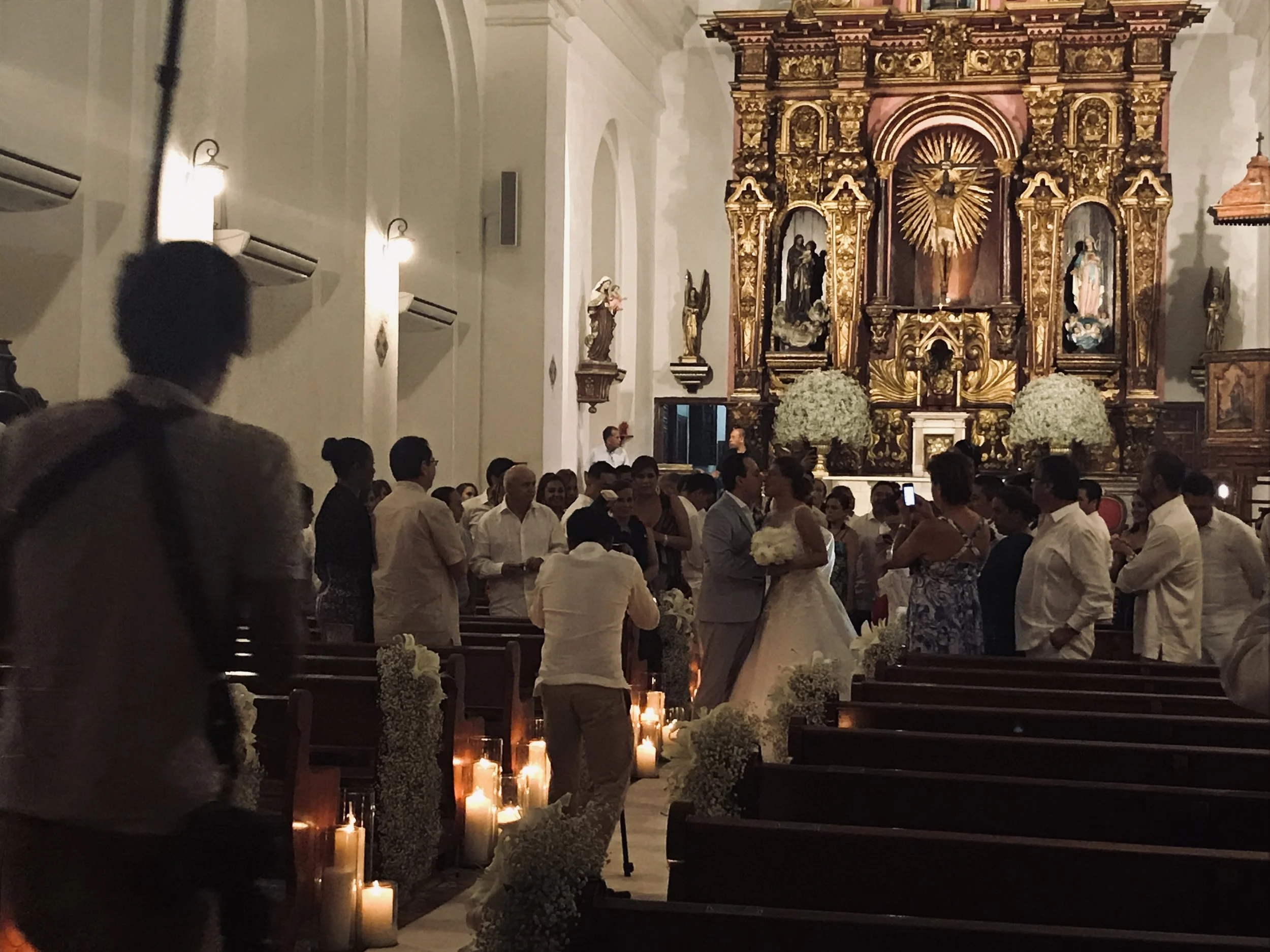
A beautiful wedding— bless the couple and the family for their kindness and energy!
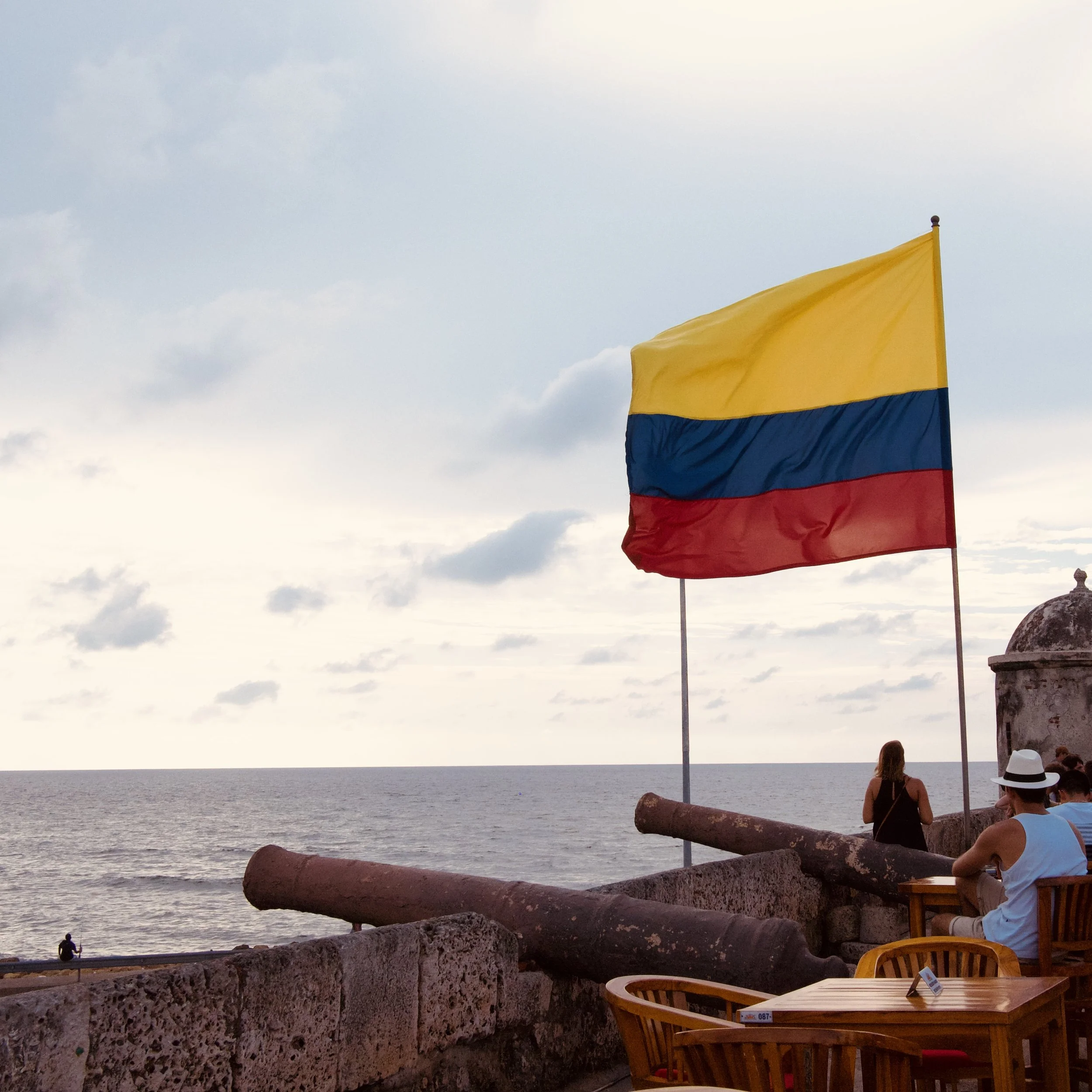
Cannons facing the horizon.
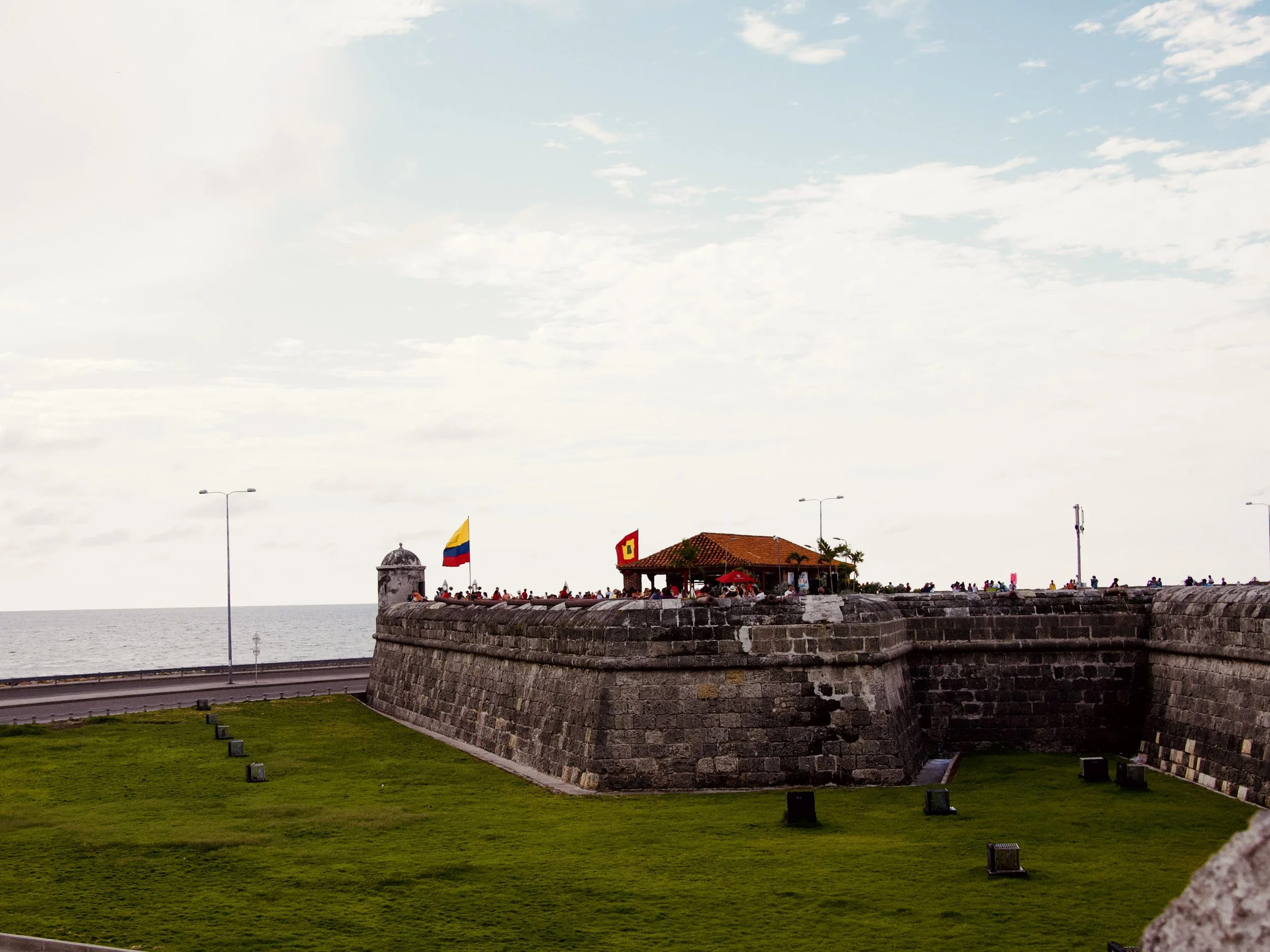
A portion of the northern part of the Wall.