Luxor, Egypt
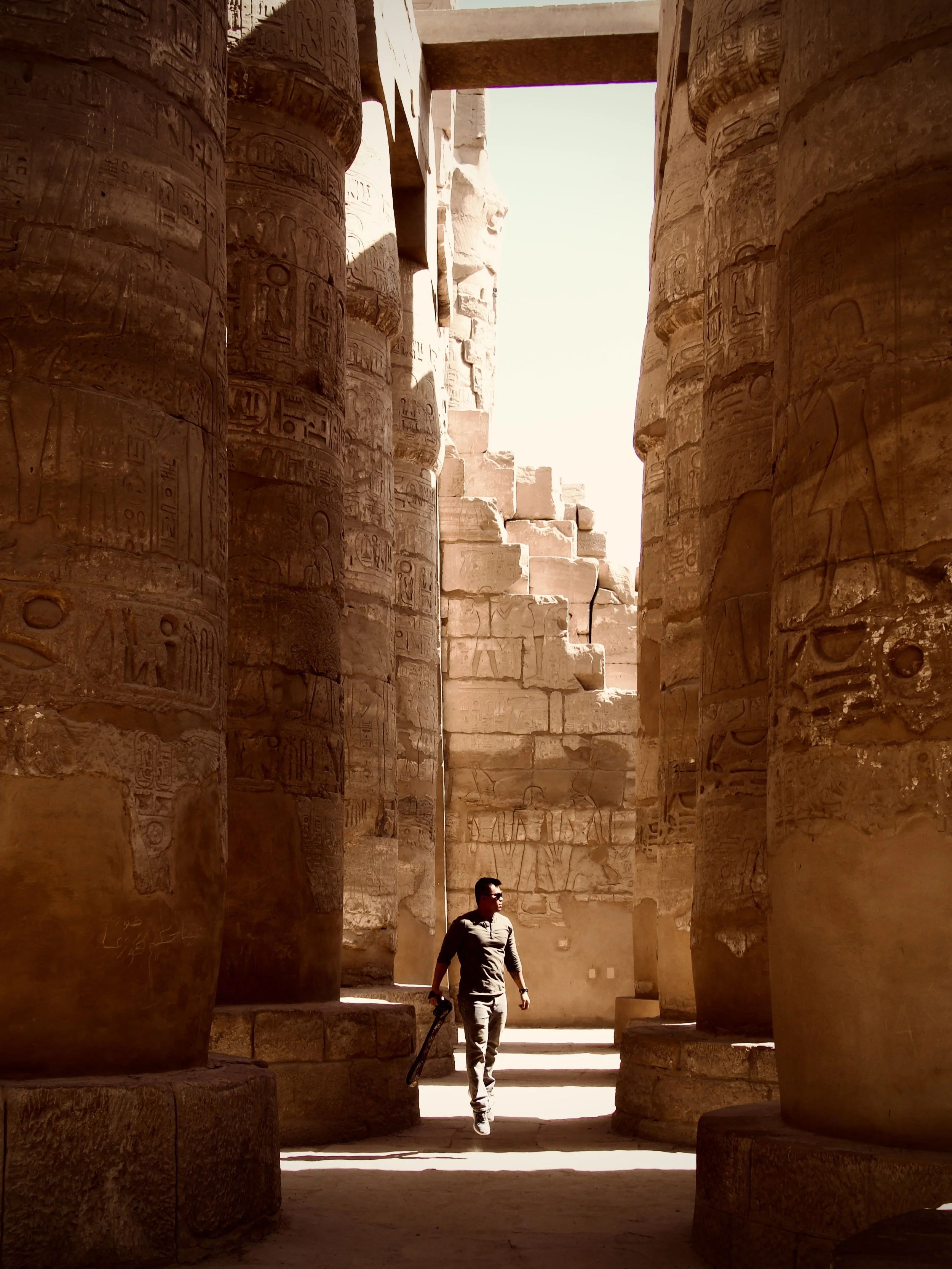
Quil, suspended in Karnak, Luxor, Egypt
Karnak Temple
“Again,” I said, straightening my clothes and wiping my forehead. “I’ll get it this time, I promise.”
Niel waited a moment, gave the signal, and pressed the shutter button.
I jumped.
“I think I got it,” he said. “Want to see?”
“Maybe later,” I said, slightly tired by the amount of jumps I’d done. “I’ll go with what you got.”
Niel and I had been friends since we were kids — the kind of friendship that survives distance, disagreements, and long stretches of not talking, then picks back up like no time passed.
I pointed towards Faith, the only beautiful sign of life in that ancient stillness, quietly taking pictures with her phone. We walked over to her, by the massive columns where she stood; neck craned upward, trying to make sense of another set of hieroglyphs.
“They represent a desire for immortality,” I said, waving my hand at the symbols around us with enough flare to attract the eyes and ears within range. “Recording a moment in their lives, hoping to earn a spot in eternity. That’s what they mean.”
“Really?” she asked, eyes still fixed on the symbols above her head.
“I don’t know,” I joked, and pulled her toward another set of columns. “Sit here and look up. I have a good photo in mind and a picture you’ll love.”
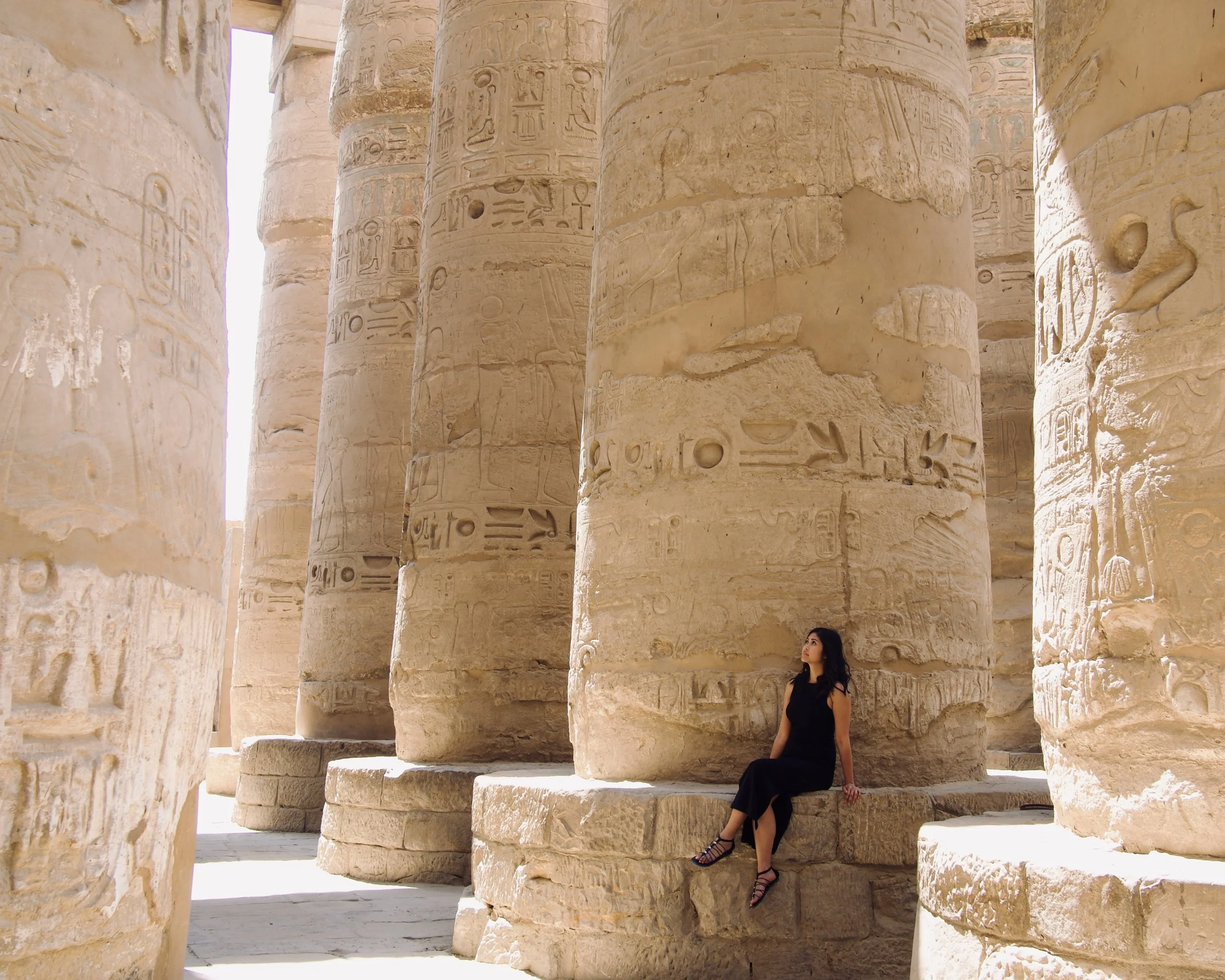
Faith in the Great Hypostyle Hall, Luxor, Egypt
The Great Hypostyle Hall sits inside the Karnak Temple Complex, its columns so large they can block out the sun. Built around 1,290 BCE, Karnak Temple served a spiritual purpose for the ancient Egyptians, who saw it as another mansion for the gods — the Great Hypostyle Hall serving as the transit station for the boat of Amun-Re. Now, some 3,250 years after its completion, it serves a similar purpose for visitors seeking a glimpse into the ancient past: a transit station, part of a tour.
Luxor was our second stop on our trip through Egypt, after a few days in Cairo. By this point in the adventure, we had explored the Great Pyramids, joined an Egyptologist to see King Tut’s treasures firsthand, walked through Cairo’s souks, made papyrus paper, and sorted through jewelry too expensive for our taste but too memorable to pass up. We had one more day in Luxor before driving to the coastal city of Hurghada.
Niel and Faith continued looking around in silence, each taking in the moment for themselves. I waved to our guide, signaling that they were going to explore a bit, then sat down on a large slab of rock. It was clearly some unfinished piece of the temple, now serving as a makeshift bench.
I looked at the two of them again: Niel, who’d known every version of me I’d ever tried on and outgrown. Faith, who was, ultimately, my heart and my future.
“Sir, I will be back in ten minutes, a little before eleven o’clock,” our guide said in a low voice. “I have to use the bathroom, if that’s okay. Not many people here yet, so it’s a good time to take your pictures.”
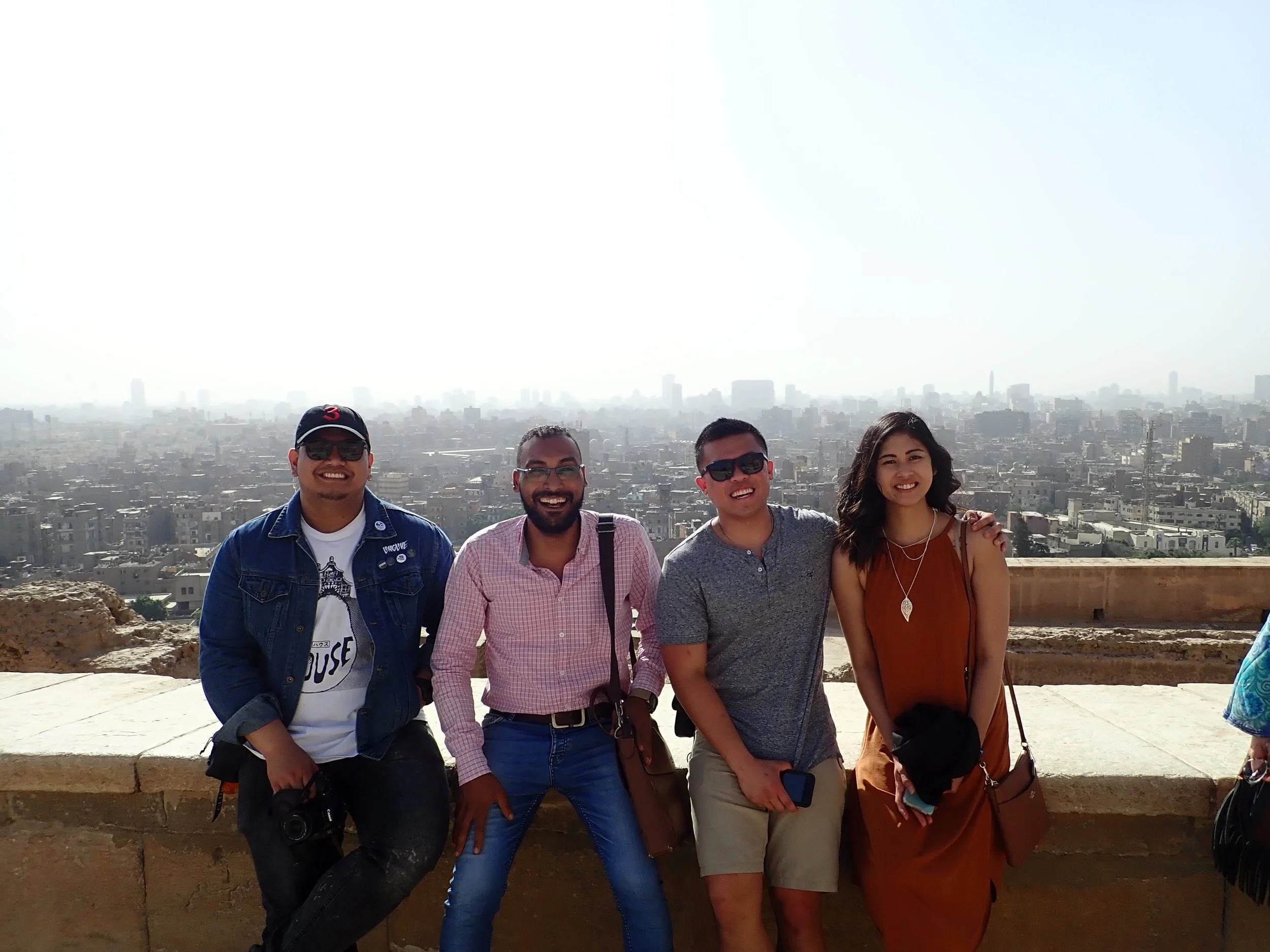
Niel, Hussein, Quil, and Faith, Cairo, Egypt
I nodded and turned back to my phone, where a photo showed Faith, Niel, and myself sitting beside our Egyptologist friend from Cairo, Hussein, just outside the Muhammad Ali Mosque. I remembered telling Hussein in Cairo about how much I admired him, and how much I envied his career. He laughed, of course, and thanked me for the kind words. I’m sure he thought I was just being polite, but there was sincerity behind every word. I smiled, thinking about what my life might have looked like had I chosen a different path than the one that brought me here.
As a boy, I ran around my house jumping over furniture, chased by imaginary dangers, avoiding death by ducking under a table in the nick of time or successfully traversing my bedroom without touching the floor. I’d dig holes in my yard looking for items that weren’t there and consult encyclopedias about animals and monsters for hours. I practiced the walk. The squint. The reaction to getting shot after giving chase, and dying after completing a mission. The way a man might duck under a rope line like he’d done it a hundred times. Nobody had to tell me what success looked like. I’d already seen the movie and memorized every documentary. I had a path laid out before me, and an excitement unlike the world had ever seen.
I remember saying it out loud multiple times at home, about how I was going to be an archaeologist. My parents smiled the way adults do when a child says something they find endearing but don’t quite take seriously. My other relatives, however, laughed and talked down, asking whether I meant like the guy in the movies, and when I said yes, they laughed harder.
Before we're ever tested, we build a version of ourselves and announce it to the world without fear. What follows is a lifetime of finding out what the world intends to make of it instead.
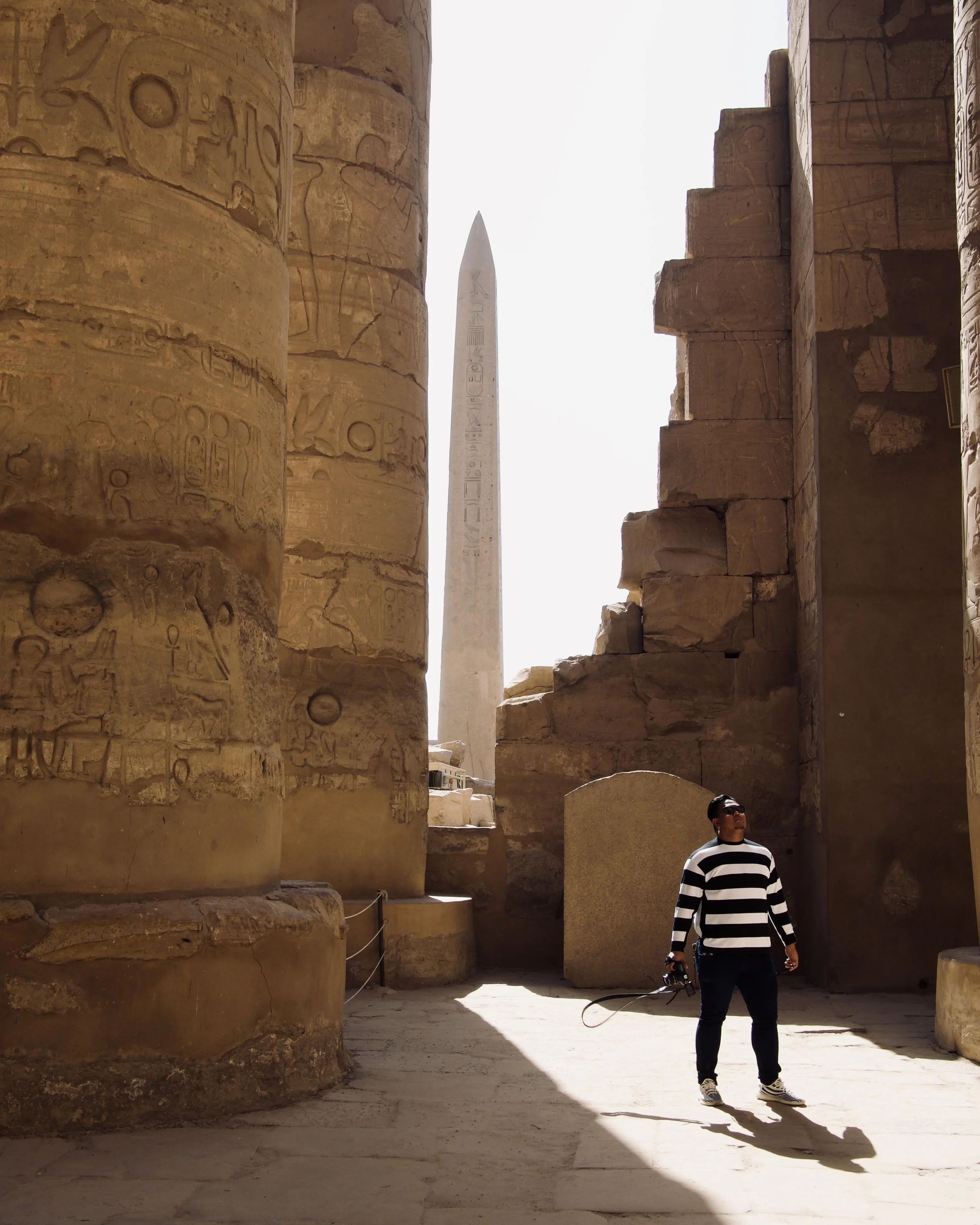
Niel in front of one of the Karnak Obelisks, Luxor, Egypt
The world spoke in a manner where people were no longer interested in imagined adventures yet to occur. Then with peers whose interest in other things trumped any personal curiosity. Then as family members who firmly believed more in incapability than possibility. All to say: I didn’t much like what the world had to say, and it confused me far more than it upset me.
Over time, my personal and professional choices carried me further away from my childhood ambitions, guided by the belief that adulthood had no room left for childish fantasy. And yet, year after year, the world kept talking. It took me a long time to notice that every “no” had pointed somewhere — just never where I was looking. Yet somewhere along the way, without noticing, I started listening. And somewhere in those moments, my attention turned from pursuing an imagined version of myself to creating a life whose ordinary days felt worth anticipating.
My shoulders relaxed after the brief reminiscence. I let out a breath I didn’t know I’d been holding, and for a second the heat didn’t feel so bad.
I didn’t know it then, but that small change in direction brought me here, in this moment.
“Mr. John?” our guide said softly. “We are ready to go. It would be good to rest for the remainder of the day, before tomorrow.”
I stood, gathered myself, and raised my camera for a few more photos. I’m no archaeologist, no treasure hunter, nothing of the sort — but I did get to immerse myself in this cinematic place, imagining what may or may not have happened here thousands of years ago. It’s far from a career. But it’s not a bad substitute.
Faith slipped her hand into mine as we started walking, still looking back over her shoulder at the columns like she wasn’t quite ready to leave them behind. Niel fell in step on my other side, already asking the guide about lunch.
I turned to our guide and motioned toward one of the water bottles he carried, grateful for the ice-cold relief.
“That sounds good,” I said. “Where are we going tomorrow?”
“We’ll cross the Nile and visit one of my favorite places in Luxor,” he said. “Tomorrow, we go to the Valley of the Kings.”